


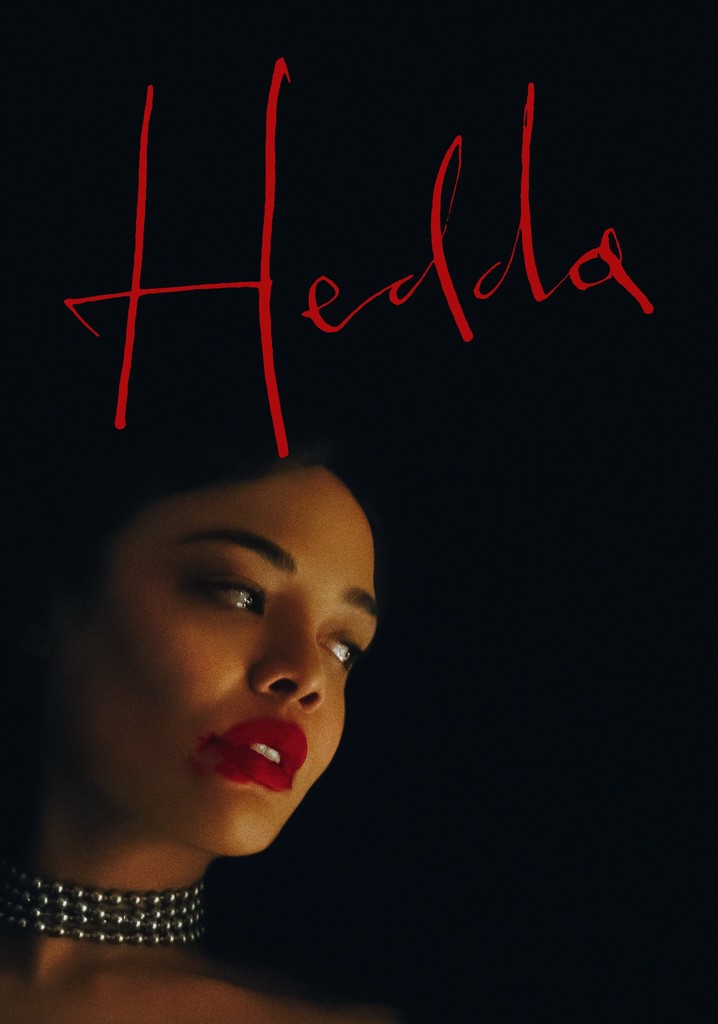
First off, it must be said: Hedda certainly looks gorgeous—both the movie and Tessa Thompson as the titular character Hedda Gabler. Writer/director Nia DaCosta has taken Henrik Ibsen’s classic play and put her stamp on it in more ways than one, changing the setting from the late 1800s to a lush, uber-fashionable 1950s, adding race dynamics, and giving it a decidedly queer bent. More spicy than stuffy, this new interpretation certainly gives Ibsen a little kick.
The lovely Hedda (Thompson) is hosting a lavish party in her lavish new home. Don’t ask how her husband George Tesman (Tom Bateman), a professor, can afford to buy and refurbish what is basically Downton Abbey for his recent bride (an explanation is kind of awkwardly inserted later). Hedda demands no less, and he is desperate—she already seems to find her husband tiresome and her marriage suffocating.
Like a bored cat, Hedda has invited a variety of people that are sure to cause some sparks, both romantic and otherwise. The guest list ranges from stuffy academics to women who flirt with more of a, shall we say, “Bohemian” outlook on life. A surprise guest is Eileen (Nina Hoss), whom, it becomes immediately clear, has a past with Hedda based on the crackling energy between the two women as soon as she walks in the door.
As one of the only women in the academic circle, Eileen has something to prove to her peers. But stepping into what is basically a sneering room of her male colleagues at a party hosted by her ex has her desperately wanting to fall off the wagon after months of sobriety. Her new girlfriend Thea (Imogen Poots) has also shown up at the party to nervously shadow/protect her partner. Meanwhile, Hedda lurks.
As you can imagine, as the evening goes on, everyone starts to behave badly. There are sexual trysts, late night swims, and drunken dancing. But throw in a pistol from Hedda’s late father, a valuable academic manuscript (that manages to disappear), and a whole load of regrets and bad decisions, and you know that the night will not end well.
I’m going to say upfront that Henrik Ibsen’s work is not my favorite, going all the way back to my struggle with A Doll’s House in high school. I don’t know why I often have a hard time following what the heck is going on in his works, but I couldn’t help but think open captions would have really helped me this time around. I wasn’t sure who or what people were talking about half the time, and how things fit into the bigger picture. The broad glossiness of this version helped a bit, but I have to admit it took me a while to warm up to the story and feel involved.
Now, no slight to Tessa Thompson, but for me, the performance that truly grabbed my attention was Nina Hoss as Eileen. As the story progresses, she embodies a complex, proud, fiercely intelligent woman who nevertheless suffers from crippling struggles and setbacks. She has excellent chemistry with Thompson, and their scenes crackle with simmering resentment and unresolved desire. Eileen’s evolution (or devolution) over the course of the evening is, in the worst way, mesmerizing—Hoss is simply fantastic, as always. I may not be entirely sold on Henrik Ibsen, but Nina Hoss makes this interpretation worth seeing.