


 With the constant barrage of news about all the horrors and atrocities happening around the world, it can get very easy to feel very hopeless about it all. But watching a documentary (or several) about courageous people taking a stand, fighting back and/or lending a hand can give your weary soul the boost it needs. Here are a whole bunch of the films screening at the festival this year that do just that.
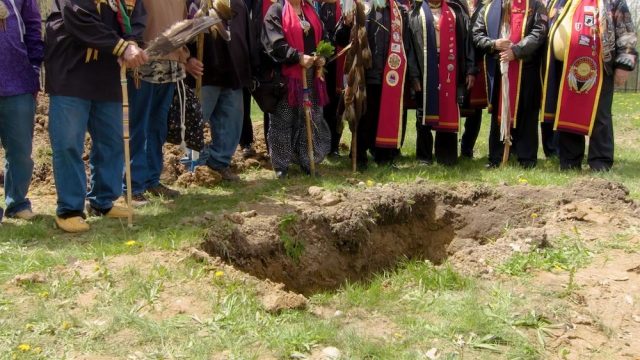 Aanikoobijigan [ancestor / great-grandparent / great-grandchild] (7/8)
Sometimes, when you decide to check out a documentary on a whim, you wind up stumbling upon something great. That was the case for me and this revelatory examination of the “ownership” of the roughly 200K Indigenous remains on display in American museums, and the fight by various First Nations tribes to have those remains repatriated and returned to their descendants for proper burial. Co-directed by Adam and Zachary Khalil, and set against the work of MACPRA (Michigan Anishinaabek Cultural Preservation and Repatriation Alliance), the film traces the centuries-old practice of looting graves in the name of science; the ongoing refusal of many institutions to repatriate remains and funerary objects; and the ethical, moral and cultural issues surrounding the study of evolutionary history. With occasional detours into complementary topics — such as the “Indian burial ground” trope found across pop culture — and featuring commentary from archivists, historians, scholars and repatriation specialists, the doc is a hugely relevant exploration of how scientific knowledge has somehow been deemed more important than culture, tradition and basic human decency.
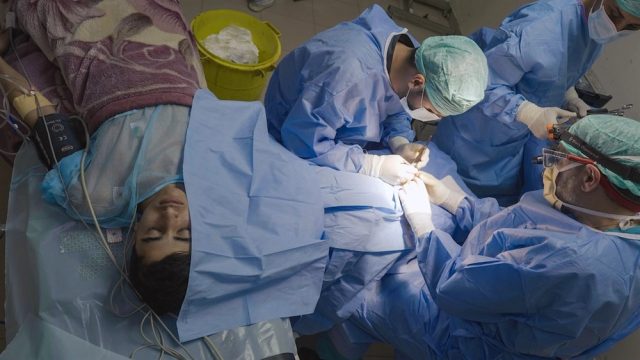
American Doctor (7/8)
Right from its opening frames, director Poh Si Teng’s raw, unflinching doc throws you directly into the unfiltered carnage and destruction of war, and the toll it takes on its youngest victims. Tip: brace yourself, because things do get quite graphic throughout the film. Set largely inside the Nasser Medical Complex in Gaza, the film follows three U.S. physicians — trauma surgeon Dr. Feroze Sidhwa (who’s Zoroastrian), orthopaedic surgeon Dr. Mark Perlmutter (who’s Jewish), and emergency physician Dr. Thaer Ahmad (who’s Muslim) — as they bring their skills and supplies to Palestine to help the overwhelmed medical community treat the unending stream of patients flooding through their doors. Each doctor has his own reasons for answering an inner call to service, and all three struggle valiantly if unsuccessfully to get the realities of the situation overseas into the media and in front of American lawmakers. Following the doctors on the ground in Gaza and back home, the film does what Perlmutter asks of the director at the outset: to show the truth about what the doctors encounter, no matter how awful, and not a sanitized or censored version that might seem more palatable/sellable to an audience. As a result, Teng successfully tackles a politically charged topic in a deeply human and effective way, revealing the challenges facing both the Palestinian people and the Westerners trying to help.
 Ceremony (8/8)
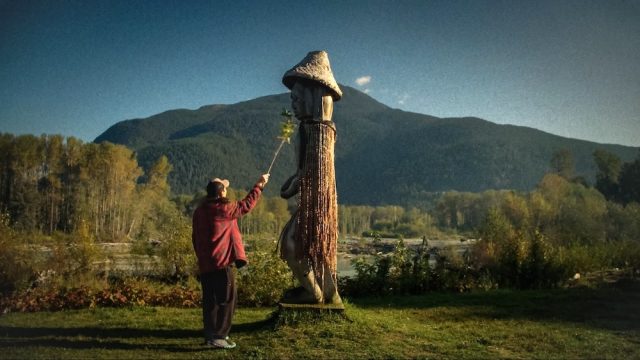
Back at Hot Docs 2023, I saw — and loved — director Banchi Hanuse’s Aitamaako’tamisskapi Natosi: Before the Sun, so checking out her newest feature was a no-brainer for me. And I’m happy to say: it’s another winner. 12 years (!) in the making, this film does what I love documentaries to do: take a Big Issue and examine it through a more specific, more personal lens. Set in Bella Coola, B.C., the doc probes the mysterious disappearance of ooligan — a species of wee fish vital to sustenance, medicine, tradition and culture for the Nuxalk Nation — from the Bella Coola River. Why did they suddenly vanish in 1998? And how has the brutal history of colonization and erasure flowed through the centuries to this modern-day mystery? Archival footage, animation and interviews with Nuxalt community members help connect the dots, revealing both the truth about settler tactics in the past and the ongoing struggles to combat Indigenous-rights violations today. Once again brimming with beautiful cinematography, engaging characters and a compelling story at its core, Hanuse’s latest is another impressive addition to her resumé, and one that cements her as a talented documentarian to watch.
 House of Hope (6/8)
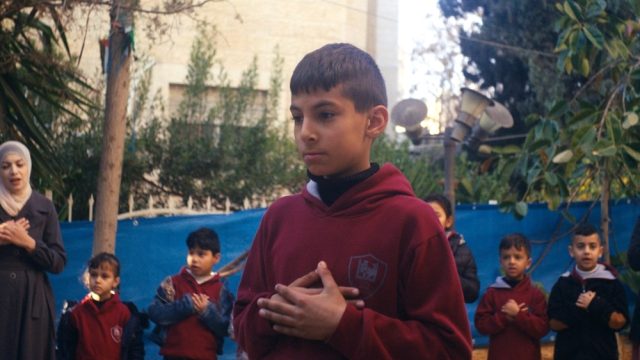
Like American Doctor, this documentary from director Marjolein Busstra is set in Gaza, but this time at a unique Waldorf school run by husband and wife Milad and Manar. Despite its conflict-riddled environment, the school provides a safe haven for its young students, who are taught love, forgiveness, and to follow the examples of Mother Teresa and Martin Luther King Jr. But those lessons intended to feed hearts as much as minds become more challenging to impart when external forces — namely, Israel’s post-October 7 attacks — put the city and the school under siege, throwing the staff and students into chaos. Effectively exuding a palpable sense of anxiety, fear and stress, the film shifts gears from following the day-to-day activities at the school to examining the psychological impact of war on learning, both directly and indirectly, and how Milad, Manar and their kids navigate the world as their neighborhood comes under attack. Quiet and insightful, it’s another in a series of potent and important profiles of everyday citizens in a region under fire, where sending your children off to school in the morning really is a life and death decision.
 Let Our Mountains Live (7/8)
When you think of the battle for Indigenous rights, Norway might not be the first country to spring to mind. Yet the fight of the Sámi people to have their culture, traditions and rights recognized by the Norwegian government goes back centuries, and forms the basis for this taut, tense David vs. Goliath doc that plays like a suspenseful legal drama. Directed by Håvard Bustnes and unfolding through flashbacks during testimony at a 2024 trial, the film follows reindeer herders Sissel, Terje and Elise as they go up against power companies and the Ministry of Energy over the destruction of important grazing land to make way for wind turbines. Supported by an army of young activists, the herders set out to combat and correct the violation of their Indigenous rights, enduring a frustrating-beyond-measure d-r-a-g-g-e-d o-u-t legal process that spans several years. Compelling from the jump, it’s also a timely documentary about the selling off of Indigenous-owned land to the highest bidder, and the ongoing destruction of the natural environment in the name of profit.
 The Secret Reading Club of Kabul (8/8)
Every single year since 2022, Hot Docs has featured powerful films about the oppression of women in Afghanistan under Taliban rule and, sadly (because the brutality of that regime continues), 2026 is no exception. Last year, I cited Teaching Hawa as a must-see at Hot Docs 2025, and this equally important, heartbreaking and infuriating documentary from co-directors Shakiba Adil and Alina Hirronen serves as a fitting companion film. Drawing parallels with The Diary of Anne Frank, and compiled using the video diaries of three brave and determined young Afghan women — Rakhshana (21), Dua (23) and Mahtab (15) — the doc explores how education for girls and women has become a criminal offense, how hopelessness about the future can suffocate the spirit, and how the members of this intrepid trio literally risk their lives to learn in secret via a twice-a-week book club. As raw and unflinching as it is inspirational, the documentary provides further evidence of the truly catastrophic-for-women repercussions of the U.S. withdrawal from Afghanistan in 2021, and how, in the absence of international intervention, resilience and small acts of resistance remain the critical keys to survival for the mind, body and soul.
 The Seoul Guardians (5/8)
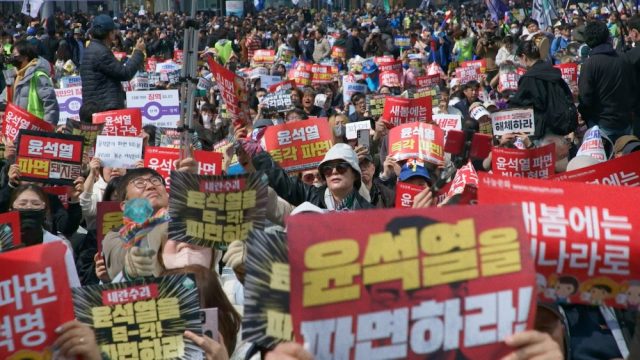
On December 3, 2024, South Korean President Yoon Suk Yeol declared martial law because the country’s officials were opposed to his policies. He claimed martial law would be his way to thwart an attempt by North Korea to overthrow the government… and all hell promptly broke loose. This on-the-scene doc from co-directors Jong Woo Kim, Shin Wan Kim and Chul Young Cho captures the chaotic aftermath at the National Assembly immediately following the declaration, as all political activity is banned and lawmakers are literally locked out of their jobs by closed gates and armed guards. Juxtaposing archival footage of 1980 Gwangju massacre (a result of the last time martial law was declared in South Korea) against the events unfolding in present day, the film chronicles the mayhem as citizens and politicians begin to gather outside the Assembly — their numbers and their rage growing by the minute — to have the declaration overturned. While the documentary is a vital record of what went down and does put the viewer squarely in the middle of the action, its mostly verité approach means it doesn’t really provide insight into what people were thinking or feeling, creating an oddly clinical and less engaging (for me, anyway) experience.
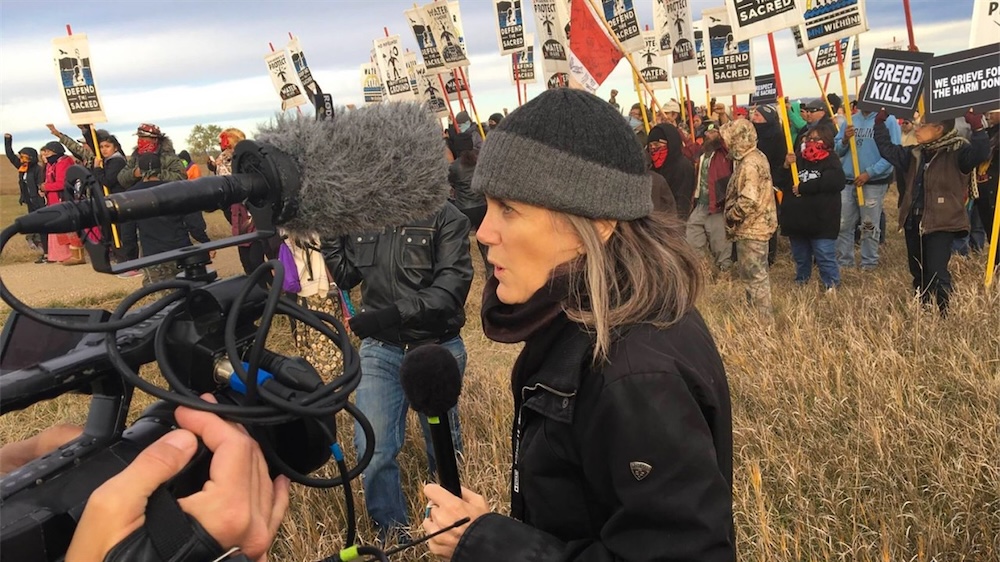
 Steal This Story, Please! (7/8)
Journalist, feminist, activist and all-around ass kicker, Democracy Now! creator Amy Goodman is as determined and dogged in her pursuit of the truth as she is devoted to putting herself right in the heart of the action. It’s no surprise, then, that co-directors Carl Deal and Tia Lessen would make her the subject of an equally compelling documentary. Tracking key moments in her life and career, the film chronicles Goodman’s ascent through the journalism world, from editing her family “newspaper” as a kid to dodging bullets, enduring beatings, getting arrested and risking her life to report from some of the world’s most dangerous locales, including her now-legendary reporting from East Timor, Iraq and Ukraine. More importantly, the doc explores how Goodman’s passion for being on the frontlines continues to inform her work today, as the importance of her daily independent news show grows in direct proportion to the increasing degree to which corporate media (and the news they air) is bowing to oligarch owners. It’s an important look at the value of fearless, tenacious journalism at a time when it feels like that’s disappearing, and one strong-willed, resolute woman putting it to its greatest use.
 təm kʷaθ nan Namesake (7/8)
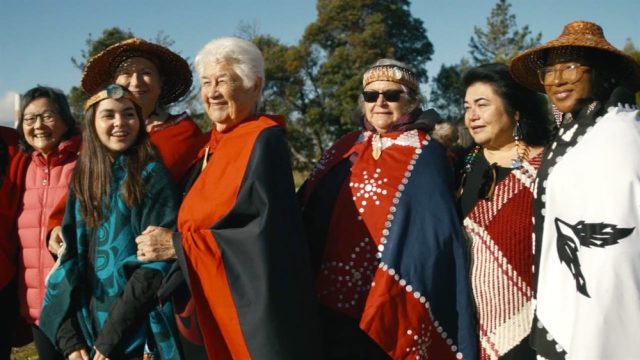
Imagine for a moment how you’d feel if a horrible human being barged into your city uninvited, wreaked havoc, killed a lot of your neighbours… and then declared that he was renaming everything after himself and his friends. That’s essentially what’s happened to countless established and thriving Indigenous communities over the centuries, and it forms the basis for this absorbing doc from co-directors Eileen Francis and Evan Adams. Examining the importance and deeply rooted responsibility of naming in Indigenous culture, both for people and for places, the film chronicles the years-long efforts of the Tla’amin Nation to reclaim their ancestral territory, and have the name of Powell River, B.C., changed to “qathet.” Unsurprisingly, the issue becomes contentious — some locals fully support the change as part of the Reconciliation process, while others view it as an unnecessary slight against the “good things” about the town’s history. Like Ceremony, it’s a wonderfully crafted and über-important film at a critical time, and it delivers a crystal-clear explanation of why something as simple as the name of a street or a town actually matters a great deal.
 A War on Women (8/8)
You know, I long for the day when there’s no longer a need to have documentaries about women being beaten, tortured, killed, oppressed, suppressed or otherwise treated poorly anywhere on the planet. Until then, I hope as many filmmakers as possible create powerful docs like the one above and this one, which also deals with women being stripped of their rights and turned into… what’s worse than second-class citizens? Only this time, Iran takes center stage. Directed by Raha Shirazi, the film chronicles the history of feminism in Iran and the rise of the “Woman, Life, Freedom” movement through interviews with seven courageous women, who have each stood up to the regime in their own way: former Minister of Women’s Affairs Mahnaz Afkhami; actor Golshifteh Farahani; activist Masih Alinejad; former political prisoner Shaparak Shajarizadeh; poet and journalist Asieh Amini; human-rights advocate Azam Jangravi; and Elahe Tavakolian, who was blinded during the protests after the murder of Mahsa Amini in 2022. Archival footage of the comparatively idyllic lives women led in pre-1979 Tehran — freely working! teaching! learning! shopping! wearing bathing suits! and not being openly beaten in the streets by any man who feels like smacking them around! — illustrates just how dramatically life for women has deteriorated. Like other documentaries of this ilk, it’s a rage-inducing but excellent film that should be required viewing for people in positions of power, who can take action to stop the ongoing gender apartheid happening in countries across the Middle East and beyond.
Check out more of Moviepie’s coverage of Hot Docs 2026 here!