


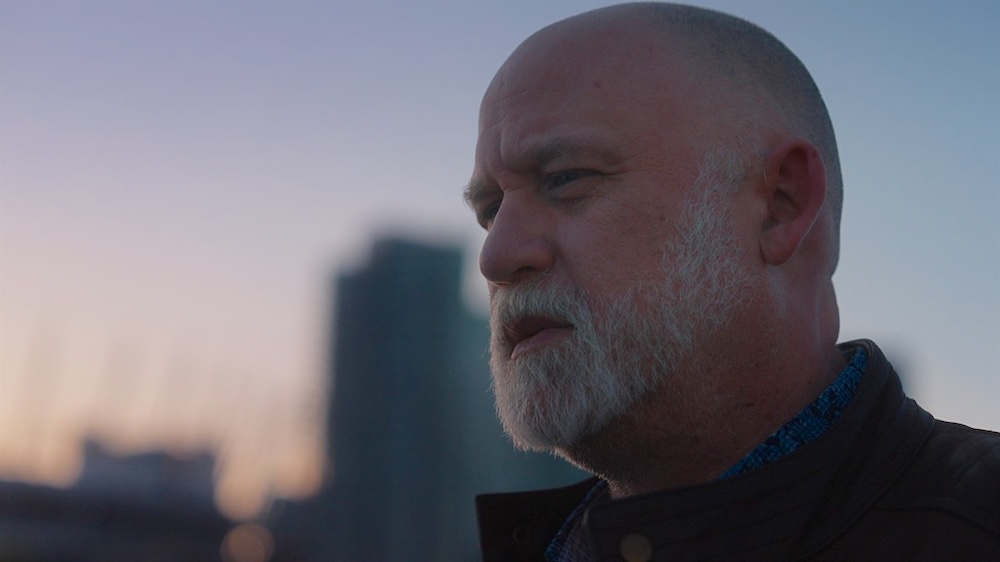
 In Searching for Drug Peace, director Alisher Balfanbayev profiles activist and dispensary operator Dana Larsen and his ongoing battle to decriminalize illicit drug use in Canada. We posed our Qs à la mode to Alisher, and here’s what he shared!
If I had to describe my film using only three adjectives, they would be: Urgent, candid, challenging.
I wanted to make this film because: The subject of the War on Drugs and the overdose crisis has been at the forefront of my mind for as long as I can remember, shaped by personal experiences and by watching people in my community lose their lives to something that felt entirely avoidable. That feeling became especially real during my time in university, when people I knew were dying after unknowingly taking contaminated drugs.
I wasn’t trying to find something to fit the mold of a film that I felt needed to be made, but rather allowing something that already existed within me to become a film. These questions, this confusion and discontent, had been building for years, and filmmaking became the outlet through which I could engage with them in a meaningful way once I came across the story that would become Searching for Drug Peace.
My intention from the very beginning was to make a film that asked more questions than it answered, and to let audiences engage with perspectives they may not have otherwise seen.
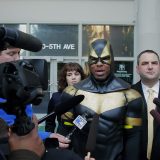
The thing that surprised me most while making my film was: When we first approached Dana about participating in a documentary, he sat us down and spent about three hours telling us his life story and the three decades of activism behind him, as well as his plans for the future.
From that very first conversation, the fact that nobody had yet made a documentary about him, his store, or his activism was pretty mind-blowing to me. His dispensary had already been operating for a few years at that point, and he was very much above ground with what he was doing.
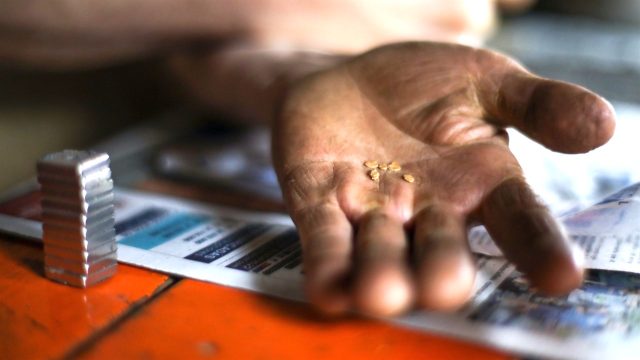
What made that even more surprising was how easy it was to get access to him. All we really did was walk into his dispensary and say we wanted to make a documentary. Dana was an open book from the very beginning, especially in terms of openly sharing the very illegal things he was doing on camera.
That being said, it still took time to build trust and reach a point where he was truly comfortable, which is what ultimately led to the candid moments in the film.
My favourite moment/scene/sequence in my film is: An early verité scene in the film, where Dana is walking from his dispensary to Get Your Drugs Tested and unexpectedly encounters a woman on the street. She notices our camera and asks who he is. Dana tells her that he runs a mushroom dispensary just up the block. The woman responds, “Planet Earth has the best drugs in the universe,” to which Dana replies, “That’s probably — well, definitely in the solar system.”
The interaction is brief and doesn’t play a major role in the film’s narrative, but it offers a small, revealing glimpse into Dana’s humour, and the world we find him in.
My most invaluable piece of doc-making equipment was/is: EasyRig. Though it’s not absolutely essential — I shot about half of the film without it — it dramatically improves both the shooting experience and the quality of the footage.
On a film like Searching for Drug Peace, where most of it was shot handheld in an observational style, you often find yourself rolling for hours at a time. Moments are fleeting, and putting the camera down can mean missing key elements of the story.
After a full day of filming, the physical toll adds up, and you sometimes find yourself reviewing dailies with a sore back, only to realize that your footage is plagued by avoidable camera shake. While there are other devices on the market, the EasyRig strikes a great balance by providing stability and taking weight off your body, while still preserving the natural feel of handheld cinematography.
My must-have snack to get me through hours in the editing room is: This is very unhealthy and I do not condone this behaviour — nor am I sure if it really qualifies as a snack — but Red Bull.
One piece of documentary-filmmaking advice I’d like to share with aspiring documentarians is: Just pick up the camera.
We came into this journey with the intention of shooting a short documentary over a few weeks, but very early on, our plans fell apart. Because my producing partner, Max, had already flown in and we had all the necessary gear, we decided to pivot and explore adjacent stories. That eventually led us to Dana. We were blown away by his story and soon realized that it warranted a feature. Three years later, through many ups and downs, we had a finished film.
If we hadn’t started shooting that initial short, we wouldn’t have ended up where we are today. At the time, we didn’t even really know what we were making until midway through, and that’s the beauty of documentary filmmaking. You figure it out by doing, and the process itself will lead you somewhere you couldn’t have planned.
Want to check out Alisher’s film or just learn more about it?
Get the scoop, and your tickets, here!