


 One of the many things I love about Hot Docs: they don’t front-load the programming and try to jam everything into the first weekend (looking at you, TIFF!), so you’re guaranteed to find amazing documentaries every single day of the festival. Here are seven more awesome films I loved, which are all premiering during the fest’s back half.
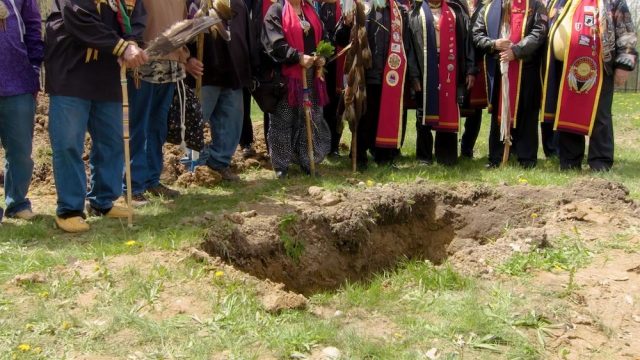 Aanikoobijigan [ancestor / great-grandparent / great-grandchild] (7/8)
Sometimes, when you decide to check out a documentary on a whim, you wind up stumbling upon something great. That was the case for me and this revelatory examination of the “ownership” of the roughly 200K Indigenous remains on display in American museums, and the fight by various First Nations tribes to have those remains repatriated and returned to their descendants for proper burial. Co-directed by Adam and Zachary Khalil, and set against the work of MACPRA (Michigan Anishinaabek Cultural Preservation and Repatriation Alliance), the film traces the centuries-old practice of looting graves in the name of science; the ongoing refusal of many institutions to repatriate remains and funerary objects; and the ethical, moral and cultural issues surrounding the study of evolutionary history. With occasional detours into complementary topics — such as the “Indian burial ground” trope found across pop culture — and featuring commentary from archivists, historians, scholars and repatriation specialists, the doc is a hugely relevant exploration of how scientific knowledge has somehow been deemed more important than culture, tradition and basic human decency.
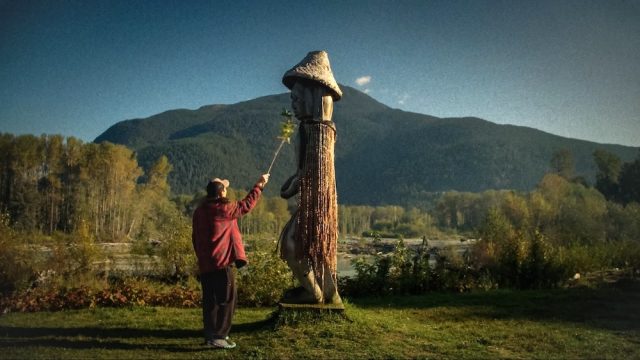 Ceremony (8/8)
Back at Hot Docs 2023, I saw — and loved — director Banchi Hanuse’s Aitamaako’tamisskapi Natosi: Before the Sun, so checking out her newest feature was a no-brainer for me. And I’m happy to say: it’s another winner. 12 years (!) in the making, this film does what I love documentaries to do: take a Big Issue and examine it through a more specific, more personal lens. Set in Bella Coola, B.C., the doc probes the mysterious disappearance of ooligan — a species of wee fish vital to sustenance, medicine, tradition and culture for the Nuxalk Nation — from the Bella Coola River. Why did they suddenly vanish in 1998? And how has the brutal history of colonization and erasure flowed through the centuries to this modern-day mystery? Archival footage, animation and interviews with Nuxalt community members help connect the dots, revealing both the truth about settler tactics in the past and the ongoing struggles to combat Indigenous-rights violations today. Once again brimming with beautiful cinematography, engaging characters and a compelling story at its core, Hanuse’s latest is another impressive addition to her resumé, and one that cements her as a talented documentarian to watch.
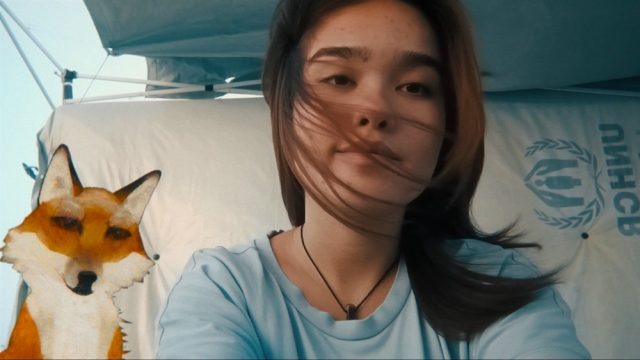 A Fox Under a Pink Moon (7/8)
Speaking of talent, the astonishingly sophisticated pieces produced by the young artist at the center of this unconventional but gripping documentary are just part of the reason to check it out. Shot over the course of five years using just her smartphone, the doc follows Soraya — a teenaged bride, who’s only 15 years old at the outset — as she makes multiple attempts to flee Iran in the hopes of reuniting with her mother in Austria. Standing in her way are iffy smugglers, unreliable transport, and an abusive, older husband whose beatings routinely leave Soraya bruised and bloodied on camera. Juxtaposed against her harrowing confessionals are gorgeous, imaginative animated sequences (inspired by her art) illustrating her hopes, fears, struggles and dreams, which reveal a thoughtful introspective heroine mature beyond her years, and create an almost art-film vibe to the entire film. Truth be told, I was fully bracing to dislike this film (“a documentary shot on a phone? by a teenager? oh this should be rich…”), but could not have been more wrong and more pleasantly surprised.
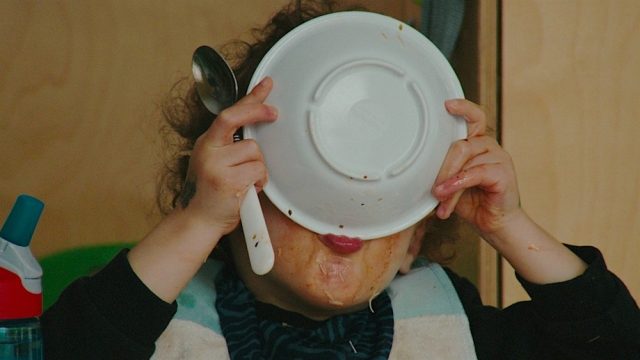 Kindergarten (7/8)
Okay. Hear me out. Nothing really happens in this documentary. There’s no storyline. No key figure. No deep issues or controversial topics or buzz-worthy subjects. It’s literally just 80-ish minutes of clips of adorable toddlers and little kids at a daycare. That’s it. About ten minutes into watching it, I thought, “WTF am I watching? YouTube?”, and I was ready to cut my losses and bail. But, for some reason, I didn’t. I kept watching. And the more I watched, the more invested I became. The more relaxed I felt. And the more I loved it. Directed by Jean-François Caissy, it’s a film about nothing and everything at the same time – the daycare and its pint-sized population provide tiny vignettes (the fight for a favorite toy, the comfort of a warm hug, the epic struggle that is eating a bowl of spaghetti with your fingers) that are as totally inconsequential as they are weirdly riveting. The themes of wonder, discovery, and learning through doing run quietly in the background, and I swear my blood pressure dropped, my body relaxed and my breathing slowed while watching everything unfold. At a festival where so many films deal with brutality, scandal, war, death, trauma, violence and the like, this sweet documentary serves as a lovely, quiet, soothing balm for the soul.
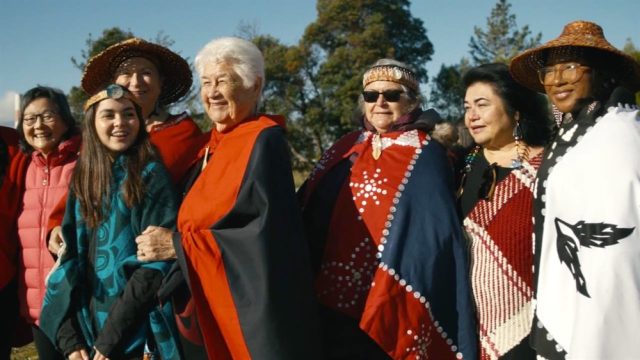 təm kʷaθ nan Namesake (7/8)
Imagine for a moment how you’d feel if a horrible human being barged into your city uninvited, wreaked havoc, killed a lot of your neighbours… and then declared that he was renaming everything after himself and his friends. That’s essentially what’s happened to countless established and thriving Indigenous communities over the centuries, and it forms the basis for this absorbing doc from co-directors Eileen Francis and Evan Adams. Examining the importance and deeply rooted responsibility of naming in Indigenous culture, both for people and for places, the film chronicles the years-long efforts of the Tla’amin Nation to reclaim their ancestral territory, and have the name of Powell River, B.C., changed to “qathet.” Unsurprisingly, the issue becomes contentious — some locals fully support the change as part of the Reconciliation process, while others view it as an unnecessary slight against the “good things” about the town’s history. Like Ceremony, it’s a wonderfully crafted and über-important film at a critical time, and it delivers a crystal-clear explanation of why something as simple as the name of a street or a town actually matters a great deal.
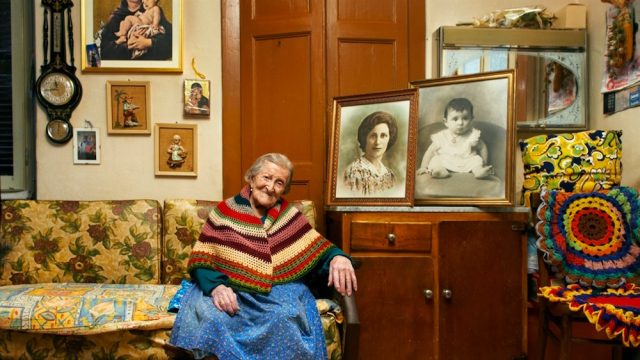 The Oldest Person in the World (7/8)
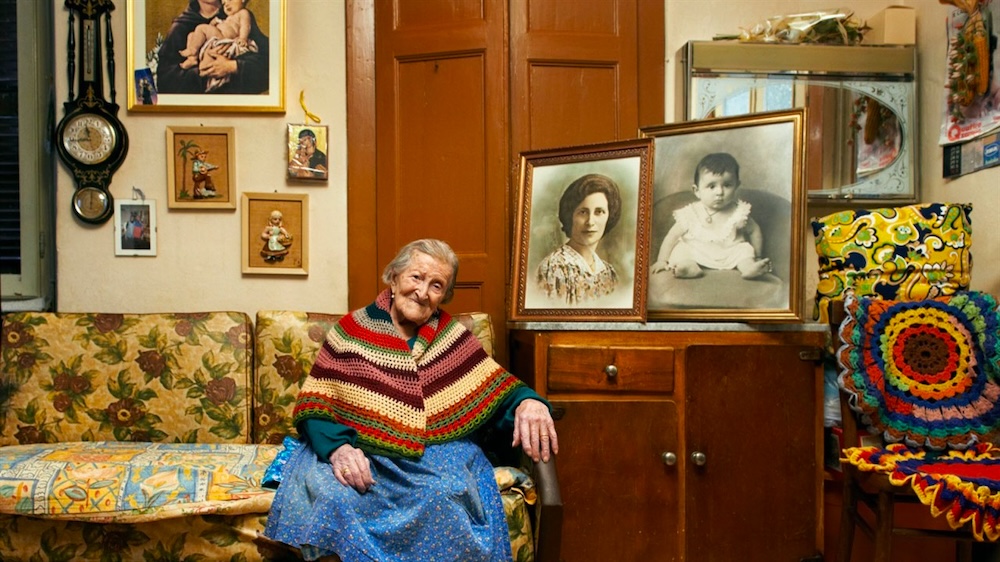
Fun fact: every single one of us has, for a millisecond, been the youngest person on Earth. That’s just one of the little nuggets of insight in director Sam Green’s heartfelt doc chronicling his 10-year journey to meet, and learn from, the ever-changing holders of the Guinness World Record as the oldest person alive (erm, a title they typically only hold for a short time, for obvious reasons). Criss-crossing the globe, Green meets assorted centenarians, who range from 115 to 117 at the time of his visit, profiles each one through archival photos and stories, and attempts to glean some of their secrets to longevity… which is not always easy, given the deteriorating state of his subjects. But the film’s focus gradually shifts a bit, as a number of obstacles (namely, a cancer diagnosis and a pandemic) arise that change the course of the narrative, both literally and figuratively. What begins as kind of a novelty project slowly morphs into more of a deeper calling, and the process becomes a meditation on mortality and what it means to live a good life. Green says he’d like the documentary to keep going in perpetuity — updating it with each new record holder as they claim they title — and I’ll be here for the next installment.
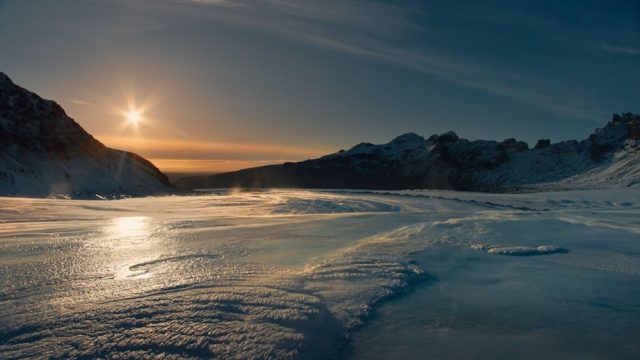 Time and Water (8/8)
Part family scrapbook, part love letter to glaciers, part ecological alarm, this poetic and deeply moving doc from Academy-award-nominated director Sara Dosa (Fire of Love, Hot Docs 2022) revolves around Icelandic author Andri Snær Magnason who, after the first “death” of one of Iceland’s glaciers in 2014, sets out to preserve their memory somehow. Framed as a video time capsule for future generations (when all glaciers may be gone), filled with fascinating glacier facts (did you know they make sound and change color as they age?), and packed with Magnason’s home movies and photos, the film is sort of a “my life in glaciers” story, as he explores glacier myths and mysteries, recounts pivotal moments in his family’s history as they relate to nature, and draws parallels between the deaths of his adventurous grandparents and the rapidly accelerating retreat of the glaciers they loved so much. Informative, contemplative, meditative and beautifully shot, the documentary is an effective ode to the passage of time, and a poignant eulogy for the natural world that’s vanishing before our eyes.
Check out more of Moviepie’s coverage of Hot Docs 2026 here!