



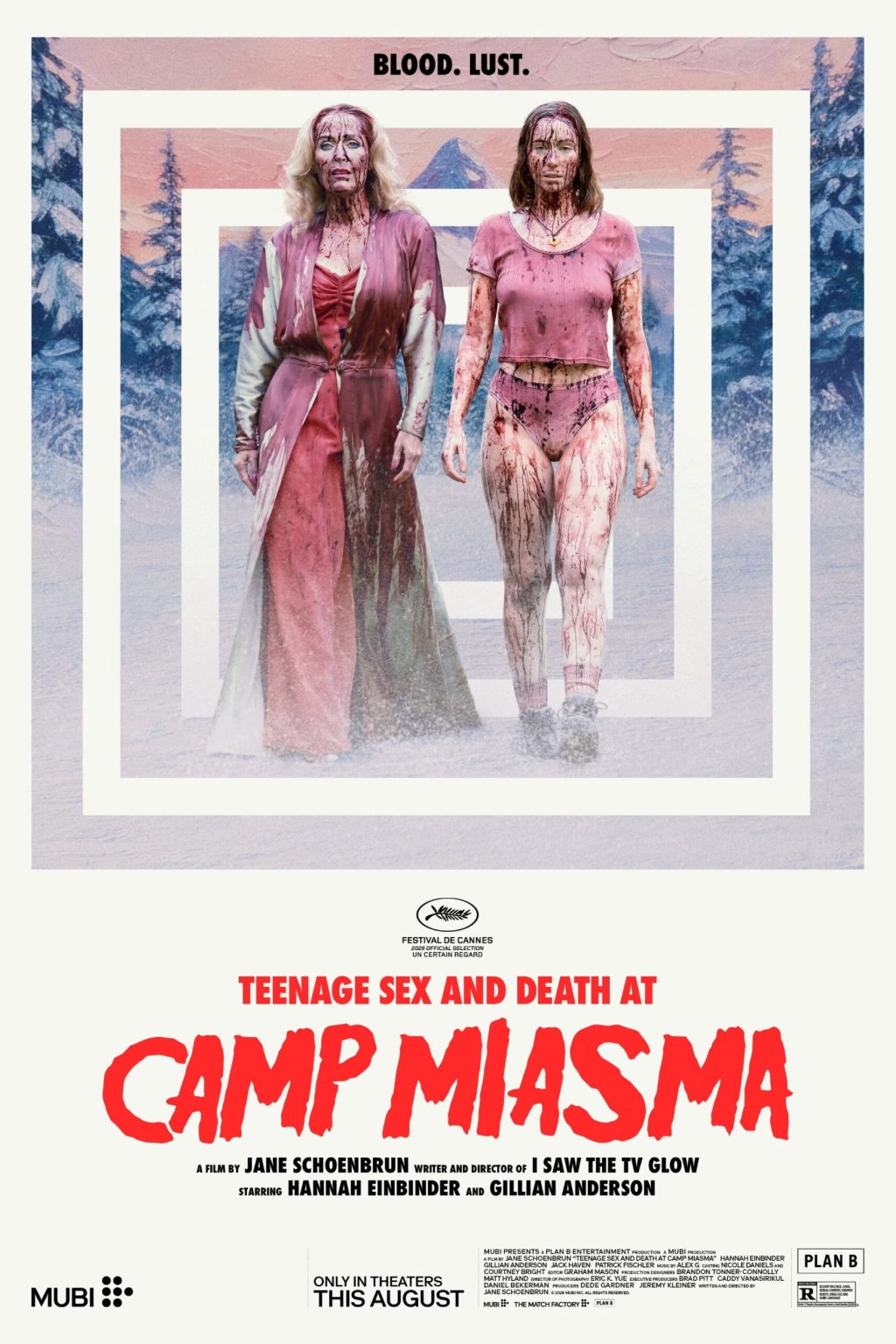
Teenage Sex and Death at Camp Miasma, on the surface, may be sold as a cheeky tribute to 80s slasher films, but if you’ve ever seen any of director Jane Schoenbrun’s other films (like the acclaimed I Saw the TV Glow), you know to expect the, well, unexpected. I think it’s fair to call Schoenbrun an auteur, a bold new technicolor voice for queer audiences, misfits, outsiders, and anyone who has ever felt disconnected from the world around them.
But let’s get back to the movie. Cute and nerdy queer filmmaker Kris (Hannah Einbinder), who made a minimal splash at Sundance (her movie was a remake of Psycho, from the perspective of the shower curtain), has been handed the reins by a lazy major film studio to resurrect the zombie IP of an iconic teen slasher series that was stabbed, slashed, and pulverized to a sad joke of its former self with over a dozen sequels. (The delightfully spot-on opening credits chronicle the pop-culture detritus of the Camp Miasma franchise of exploitive—and progressively more terrible—horny-teens-get-killed-at-a-summer-camp movies). Super-fan Kris just has to come up with a story, and she hopes that finding the original Final Girl from the first film will provide the inspiration she needs.
The original film’s Final Girl was portrayed by cult actress Billy Preston, whose character loses her virginity the night that all the other counselors lose their lives to the spear-wielding killer Little Death (clever), a character in a plastic jumpsuit with what looks like a square stereo speaker on his head. To Kris’ great surprise, she finds Billy (Gillian Anderson) all these years later, living alone at the abandoned summer camp where the original film was shot. It sounds like the setup for a straightforward horror reboot. It isn’t. Kris is titillated in more ways than one. It almost seems too perfect.
But before you think you’ve got this movie figured out, think again. I seriously had no idea where this film was going. Gillian Anderson is in full-on Gloria Swanson mode, a reclusive former cult star, who plates an inappropriate amount of fried chicken for her guest. Hannah Einbinder’s Kris is dorkily (and understandably) besotted.
But this isn’t simply a queer seduction. Not simply “flesh and fluids” (as Billy aptly describes slasher films). It’s ultimately less about sex and death than it is about pop-culture fandom, sexual repression, the collision of media and reality, and several other ideas I still haven’t fully untangled.
In short, Teenage Sex and Death at Camp Miasma is gory, splashy, sexy, and super-weird. While being an absolute head-scratcher at times, it’s also a loving and spot-on tribute to the cookie-cutter slasher films that shaped generations. Fans of slasher films will get a kick out of its intentionally low-budget aesthetic. Fans of indie films will pick apart deeper meanings. For me, I still can’t shake the image of Little Death’s disoriented, frightened eyes momentarily peering out from behind that sinister square mask. Much like its movie-within-a-movie structure, the film teases deeper layers that invite a rewatch.